.svg)
Making 177,000+ variables intuitive to explore
CLOSER is the interdisciplinary partnership bringing together the UK's leading longitudinal population studies, the UK Data Service and the British Library. Through its Discovery platform, researchers can explore 467 datasets, 177,686 variables, 327 questionnaires and 47,183 questions. It's a vast and invaluable research resource.
But navigating it wasn't easy.
The challenge
CLOSER Discovery had evolved into a powerful metadata search tool built on the Colectica Repository platform. Functionally, it worked. Experientially, it didn't.
The interface felt technical and unintuitive - more developer-designed than user-designed. For researchers trying to locate specific variables or explore questionnaires across multiple longitudinal studies, the journey was complex and, at times, frustrating.
CLOSER needed to make search and browse more intuitive, improve clarity across datasets, questionnaires and variables, and support both expert and less technical users - all without rebuilding the underlying engine, and while retaining the power of the metadata platform it ran on.
Our approach
We started with user research - understanding how researchers actually search and explore, what terminology they use, where they struggle, and what success looks like when navigating longitudinal data. That grounded everything that followed in real research workflows rather than assumptions.
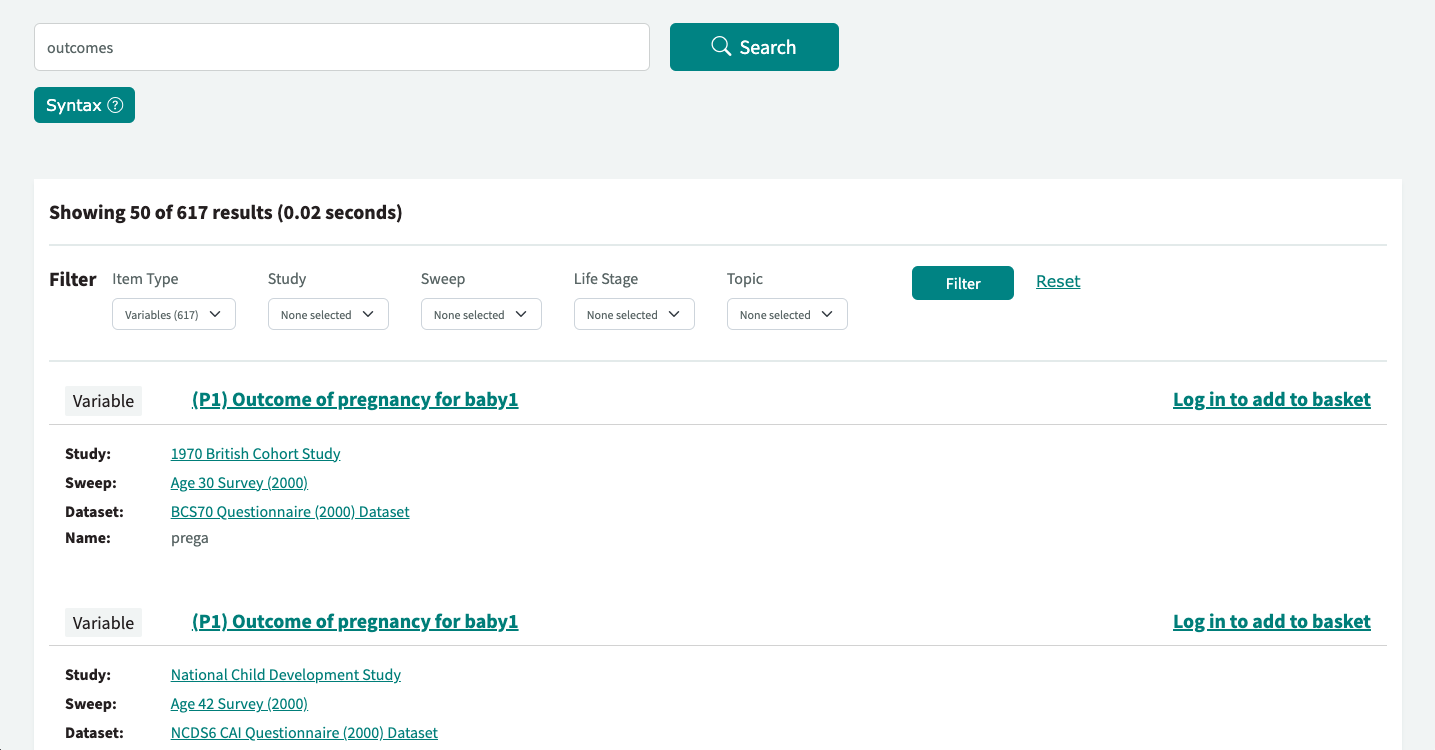
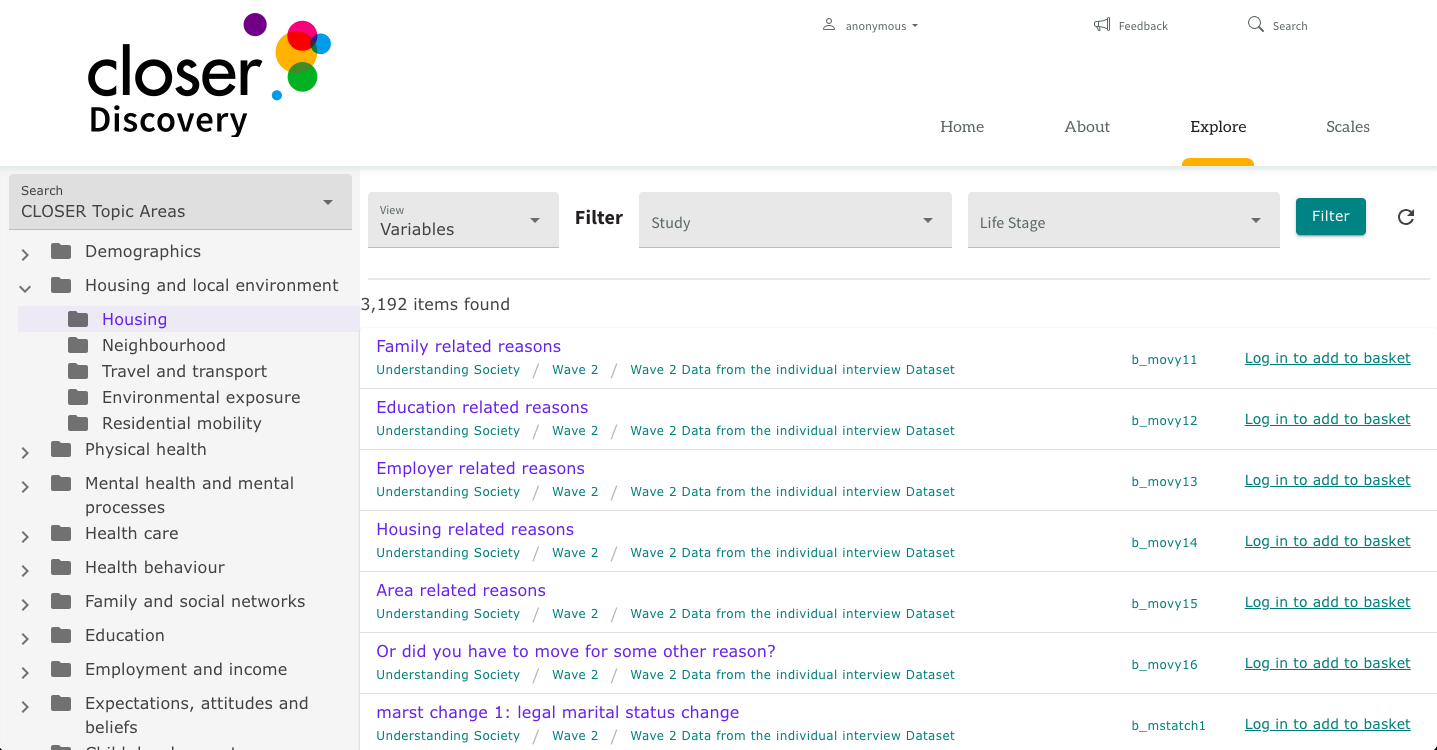
From there we turned to the experience architecture. The scale of the platform required clear structural thinking: clarifying the hierarchy between datasets, questionnaires, variables and questions; simplifying search interactions; reducing cognitive load across complex results pages; and introducing clearer pathways for browsing versus targeted search. The goal wasn't to remove complexity - the data is inherently complex - but to make that complexity understandable.
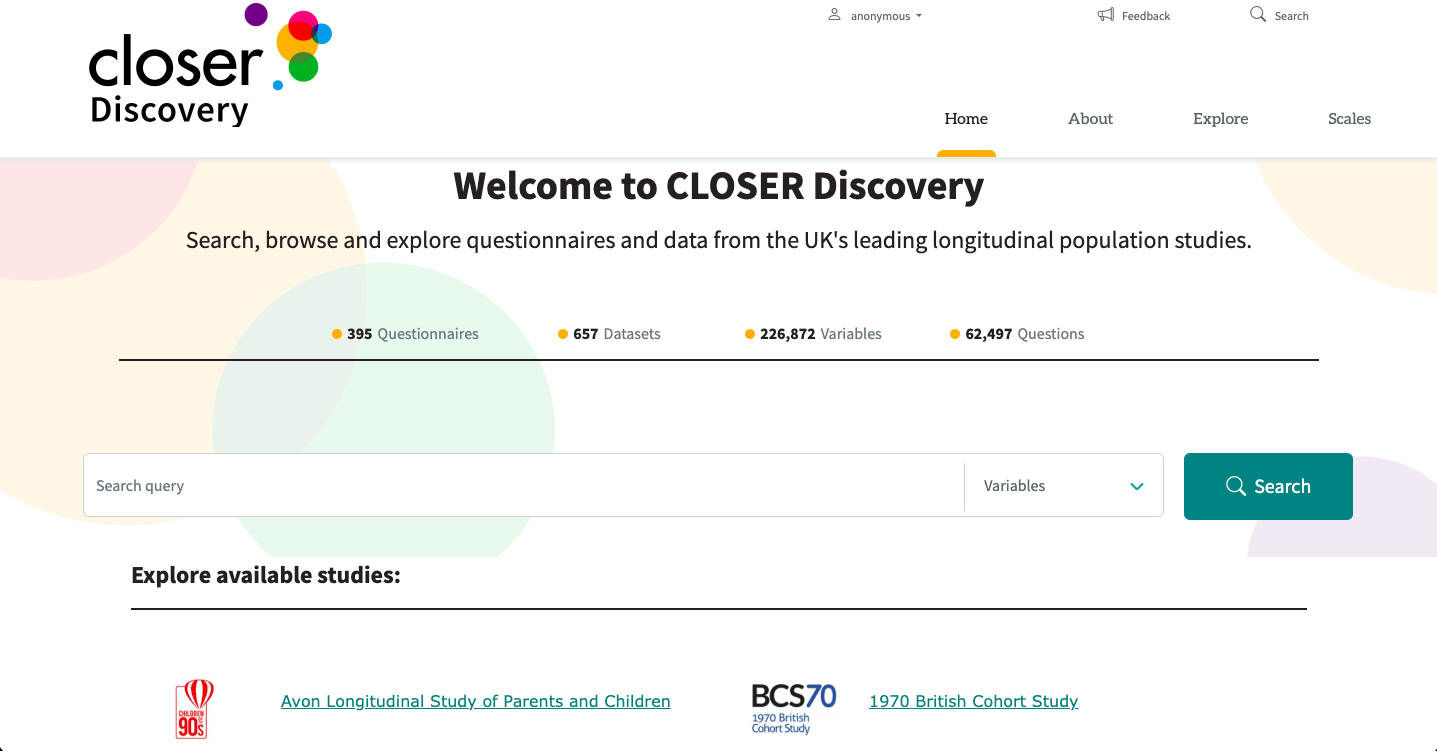
The redesigned interface aimed to feel more intuitive, more consistent and more accessible, with clearer filtering and faceting, improved metadata presentation, more legible results layouts and better visual cues for navigating between levels of data. A coherent design system brought consistency across the whole platform.
Before, it felt like a database. After, it felt like a research tool.
Designing for implementation
The Discovery platform runs on Colectica Repository - a metadata management system designed to centrally store and manage data resources. Working within that environment, Bravand produced detailed UI designs, a full design system for the team to use going forward, defined interaction patterns, and wrote clear acceptance criteria. The Colectica team then implemented the approved designs within their platform.
This collaborative model ensured design integrity while leveraging the full power of the existing enterprise system.
The result
CLOSER Discovery is now significantly more intuitive to navigate, easier to search and filter, and clearer in how it presents complex metadata. Researchers can more confidently explore nearly half a million data points across the UK's most important longitudinal studies - without needing to decode the interface first.
The platform now reflects the importance of the research it supports.
A long-standing partnership
This project is part of Bravand's 10+ year relationship with UCL, spanning the Social Research Institute, the Department of Economics, UCL Culture, the Institute of Education, UCL Innovation and Enterprise, and the Stone Centre at UCL.
Working on a complex data platform that needs to work for humans, not just developers?
We specialise in making technically powerful tools genuinely usable. Get in touch with the Bravand team.