.svg)
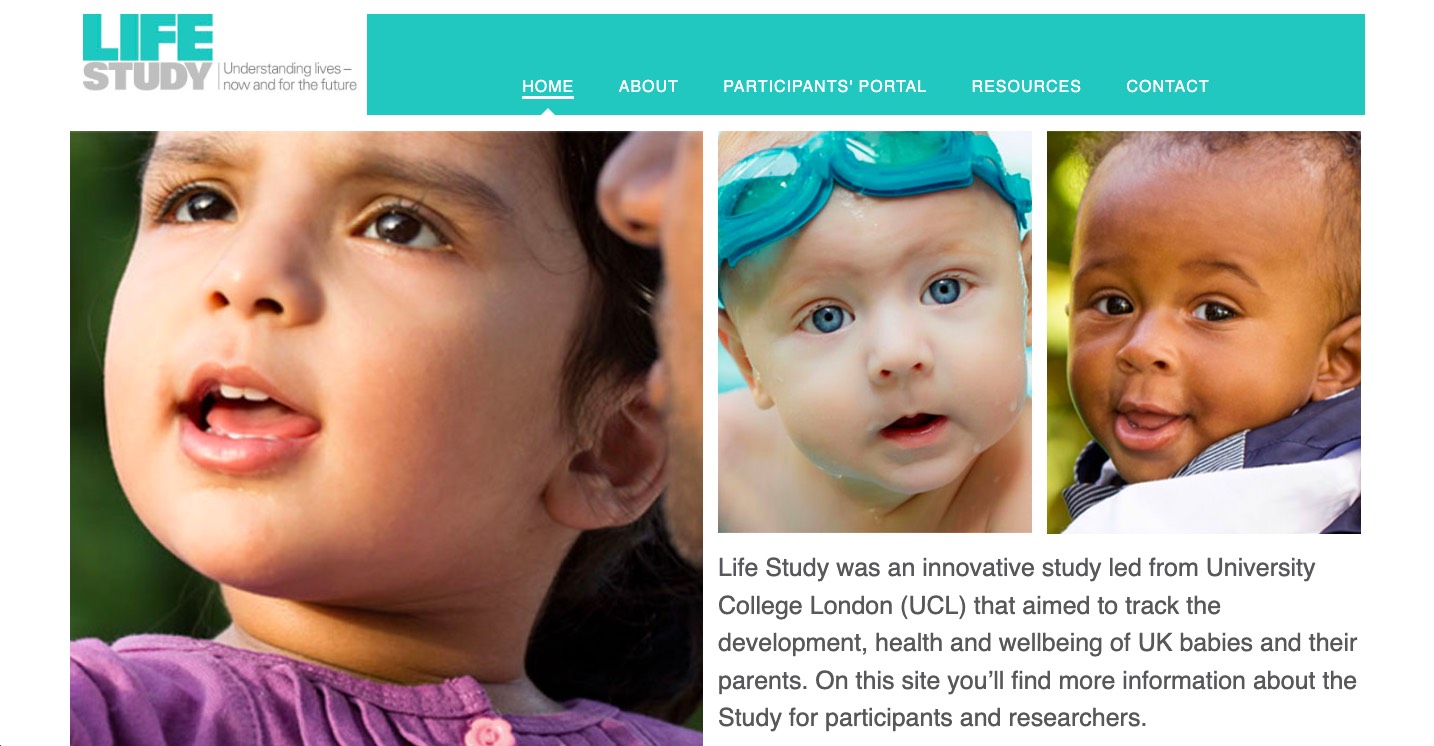
Life Study was an ambitious national research programme led from UCL. It aimed to track the development, health and wellbeing of UK babies and their parents.
Bravand supported the UCL Social Research Institute, the Centre for Longitudinal Studies and the Cohort and Longitudinal Studies Enhancement Resources (CLOSER) with user research and UX design for the Life Study website and participant portals - helping the programme communicate clearly with a wide range of audiences.
The challenge
Life Study needed to work for very different groups of people, including:
- Parents and parents-to-be
- Academics
- Researchers
- Policymakers
Each group had different motivations, levels of knowledge and expectations.
The digital service needed to:
- Build trust with participants
- Explain complex research in plain language
- Maintain academic credibility
- Support long-term engagement
- Adapt as the programme evolved
This was a high-profile, fast-moving initiative operating in a complex research and funding environment.
Our approach
We worked closely with UCL stakeholders as a research and design partner, supporting the project from discovery through to delivery.
Understanding user needs
We carried out user research to explore:
- What would give parents confidence to participate
- What researchers needed to access information efficiently
- How policymakers would understand the value of the study
- Where clarity and reassurance were critical
The insight was clear: audiences didn’t just need different content - they needed different journeys, language and levels of detail.
Structuring complexity
We helped design an information architecture that balanced:
- Clear, supportive participant pathways
- Accessible explanations of the study’s purpose
- Deeper technical content for professional audiences
- Flexible structures that could scale as the programme grew
This ensured the service could feel simple without oversimplifying.
Designing for trust and inclusion
Longitudinal research depends on trust.
We focused on:
- Clear and reassuring content design
- Inclusive user journeys
- Reducing friction and uncertainty
- Accessibility considerations throughout
The experience needed to feel credible, human and transparent - particularly when engaging parents during pregnancy and early childhood.
What we delivered
- User research and insight gathering
- Journey mapping and UX strategy
- Information architecture
- Wireframes and interaction design
- UX input into participant portal journeys
- Accessibility-focused design thinking
The outcome
Although Life Study was later discontinued after funding was withdrawn (due to challenges around recruiting participants), the digital work ensured the programme launched with a clear, coherent and user-centred foundation.
Our work helped UCL:
- Communicate a complex national study clearly
- Design engagement journeys built on trust
- Balance public communication with academic credibility
- Build digital services grounded in evidence
Even in an uncertain environment, a strong user-centred process gave the programme clarity and confidence.
A long-standing partnership
This project forms part of Bravand’s 10+ year relationship with UCL, including work with:
- UCL Social Research Institute / Centre for Longitudinal Studies
- UCL Department of Economics
- UCL Culture
- UCL Institute of Education
- UCL Innovation and Enterprise / East London Inclusive Enterprise Zone
- Stone Centre at UCL
Working on a complex, multi-audience digital service?
UCL isn't the only organisation we've helped make complex information feel clear and human. Get in touch with the Bravand team to talk about your project.