From a UCL lecture theatre to global adoption
Born in one of the world’s leading economics departments at UCL, CORE Econ is now shaping how economics is taught globally.
CORE Economics Education didn’t start as a product. It started inside one of the world’s leading economics departments.
Today, CORE Econ is used by over 560 institutions across 77 countries.
Originally developed at University College London (UCL) - within the Department of Economics, part of the Faculty of Social & Historical Sciences - CORE emerged from a simple but ambitious idea: economics teaching should better reflect the real world.
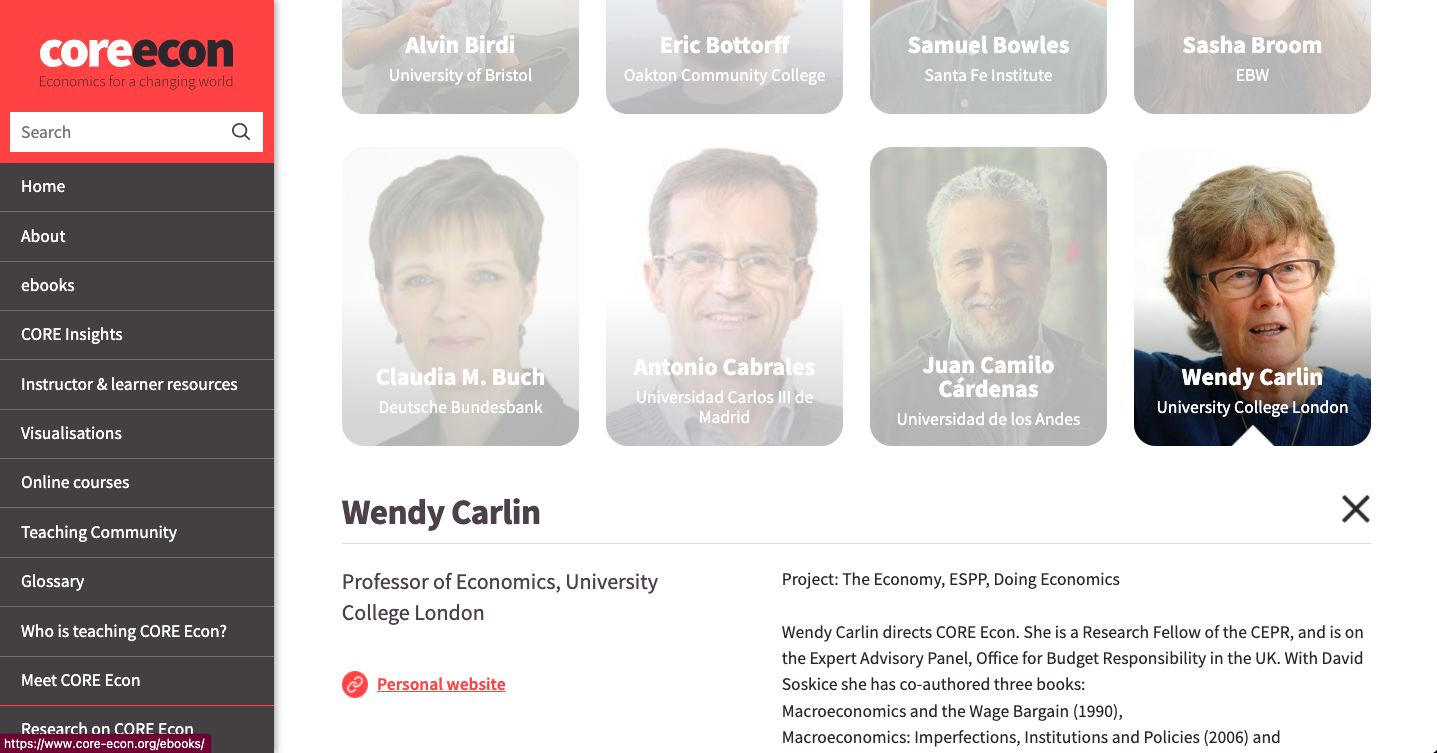
Led by Professor Wendy Carlin and a group of leading economists, the project set out to rethink how the subject is taught - grounding it in data, evidence and real-world challenges.
But scaling an academic idea into a digital platform used by hundreds of universities isn’t just about content. It requires the right technology, structure, and user experience to support global adoption.
If you’re part of a university, department or research group - this is worth paying attention to.

From academic credibility to global movement
Fast forward to today:
- 567 institutions
- 77 countries
- 169,000 learners using CORE Econ, each year
CORE Econ is no longer an experiment. It’s a global standard in modern economics teaching.
That journey matters - especially to other universities.
Because this isn’t theory. It’s a research-led initiative, born in a top-tier department, that has successfully scaled across the global higher education sector.

The early challenge: proving the mainstream would follow
When we first partnered with CORE Economics Education, the mission was clear: convince the academic mainstream that a different approach to economics would be taken seriously.
That meant the platform had to do more than inform - it had to reassure:
- This is rigorous
- This is credible
- This works in real teaching environments
The association with UCL played a key role. But digital experience was what translated that credibility into adoption.
The shift: from proof to scale
As adoption grew, the challenge fundamentally changed.
CORE evolved from:
- A single open-access ebook (The Economy)
- A small set of resources
- A persuasion-led website
Into:
- Multiple open-access textbooks and translations
- Hundreds of teaching and learning resources
- A global educator and student community
The platform needed to evolve from "why this works" to "how to use this at scale".
Designing for universities, not just users
Unlike many platforms, CORE isn’t serving a single audience.
It’s embedded inside institutions.
That means designing for:
- Lecturers integrating materials into curricula
- Departments evaluating teaching approaches
- Students engaging with content across courses
And, critically: different levels of access (logged-in educators, students, open users)
This is where academic context matters.
Because universities don’t just need content - they need structure, clarity and confidence in how that content fits into teaching.
Why research-led design made the difference
To support that complexity, we focused heavily on understanding real academic workflows.
- How do instructors discover and reuse materials?
- What do students need at different stages of learning?
- How do departments evaluate adoption?
Through user research, journey mapping and UX design, we built a platform that aligns with how universities actually operate.
The impact?
“The content is so much more visible, discoverable and accessible… exactly what we set out to achieve.”
Luka Crnjakovic, Head of Strategy and Operations, CORE Economics Education (The CORE Project)

A platform that supports academic growth
CORE continues to expand:
- New titles
- New translations
- New resources
- New institutions adopting the approach
So the platform needed to support:
- Ongoing academic publishing
- Complex content relationships
- Scalable search and filtering
- Evolving user needs
In other words: a system designed not just for launch - but for long-term academic growth.

Why this matters for universities
If your work isn’t easy to find, understand and use - it won’t scale.
CORE Econ shows what’s possible when:
- Research-led thinking meets digital delivery
- Academic credibility is matched by usability
- Platforms are built around real teaching needs
For universities - and departments like those at UCL - the takeaway is clear: if you want your work to scale beyond your institution, it’s not just about the quality of the research. It’s about how accessible, usable and adoptable it is.
From department initiative to global infrastructure
What started inside UCL’s Department of Economics is now used across the world.
That doesn’t happen by accident.
It takes:
- Academic leadership
- Institutional credibility
- And the right digital platform to support growth
Eight years on, CORE continues to evolve - and so does the platform behind it.
And for us, it remains one of the clearest examples of how digital can amplify academic impact at a global scale.
Looking to scale something complex?
We help organisations turn complex ideas into high-performing digital platforms. Get in touch to see how we can support your next phase of growth.